Packing often feels more stressful than the trip itself. Overpacking leads to heavy bags, while under‑packing causes last‑minute panic when those “just in case” items suddenly feel essential.
The 3‑3‑3 rule for packing offers a simple, practical solution. But I want to take it one step further by adding three outer layers. The 3-3-3 Plus 3 approach turns it into a complete system you can reuse for any trip, from weekends away to international travel. From two days to two months, it even solves the “travelling through different seasons” dilemma.
TL;DR: The 3‑3‑3 rule for packing simplifies outfits, but it often overlooks real‑world needs like warmth and weather protection. The 3‑3‑3 Plus 3 approach keeps you packing light and prepared by adding essential outer layers for comfort, safety, and seasonal change.

The original 3-3-3 packing rule works well in the heat of Madagascar.
What Is the 3‑3‑3 Rule for Packing?
Basically, the 3‑3‑3 rule for packing is about intentional minimalism. Instead of packing “just in case” items, you limit yourself to manageable categories that still give you flexibility.
The classic rule that many follow is simple:
3 tops
3 bottoms
3 pairs of shoes
When chosen thoughtfully, these nine items can be mixed and matched to create multiple outfits. This makes the 3‑3‑3 rule ideal for carry‑on travel, short trips, or anyone who wants to pack lighter without sacrificing comfort or style.
Packing items that coordinate well with each other gives you a huge range of combinations. It's kind of what I base my wardrobe on for my first trip back in 2017. Although I only packed a pair of hiking pants and a pair of jeans, so added my puffer jacket as a forth top.
Why the 3‑3‑3 Packing Rule Works So Well
The reason this rule is so effective is psychological as much as practical. Packing constraints reduce decision fatigue. Instead of debating every item, you focus on versatility.
The benefits include:
Easier outfit planning
Lighter luggage
Faster packing and unpacking
Less stress while travelling
I felt this personally on my first trip where I packed light, and on every trip since. There really isn’t much to worry about when you have very little to choose from. Just make sure you pack what you love, because you’ll be wearing it a lot!!
However, many travellers find that while the rule is helpful, it doesn’t cover everything. Weather changes still feel unstructured and uncatered for in the 3-3-3 packing system. You start adding extra items in and all of a sudden, your bag is bursting at the seams.
That’s where expanding the system makes all the difference.
The Core Packing Rule (Your Clothing Foundation)
The inner layer stays true to the original 3‑3‑3 rule.
This layer focuses entirely on clothing combinations:
3 tops that layer well
3 bottoms that work with all tops
3 shoes (for example: walking shoes, casual shoes, and dress or activity‑specific shoes)
The key is cohesion. Stick to a colour palette so every item works together. This core layer ensures you’re never overpacked but still prepared for most situations.
Not every trip is the same.
Ask yourself:
What activities will I actually be doing?
What climate am I packing for?
Are there cultural or formal expectations?
This layer may include:
Swimwear
Outerwear or rain gear
Activewear or formal attire
Weather‑specific accessories
Because I predominantly hike on my trips, my layers and shoes are hiking focused. Safety always comes first for me. And of course, you can always hire or borrow specialist clothing.
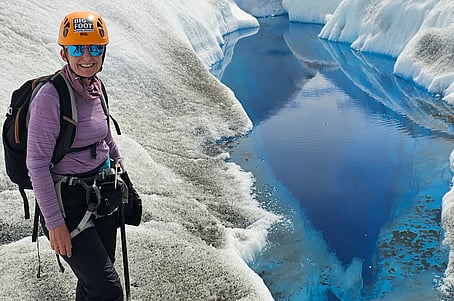
Safety gear that I didn't need to carry, Southern Icefield, Chile.
The “Plus 3” Layer: Comfort, Warmth, and Safety
I think many packing‑light guides quietly gloss over an inconvenient truth: outer layers matter. The classic 3‑3‑3 rule works beautifully for outfits, but it often assumes ideal conditions: mild weather, indoor time, and easy access to heating or shelter.
Let’s pretend for a moment that we really are travelling with just three tops, three bottoms, and three shoes. What happens when it rains all day? When temperatures drop? Or when you actually want to spend time outdoors? For me, that’s where the original system starts to feel incomplete.
I hate being cold and wet. I rarely travel without my puffer jacket and a good raincoat. The outer layer turns the 3‑3‑3 packing rule into a truly all‑in‑one system. And this is a gap I’m not willing to ignore in the original 3‑3‑3 rule.
The Plus 3 layer supports comfort and safety.
Rain gear – raincoat and rain pants (technically two items – work with me on this!)
A puffer jacket
A mid-layer merino sweater
This layering is all I find I need to survive seasonal change whether I’m in the mountains or in a city. It gives me a versatile wardrobe that doesn’t stop me going outdoors in rubbish weather. And it keeps me healthy.
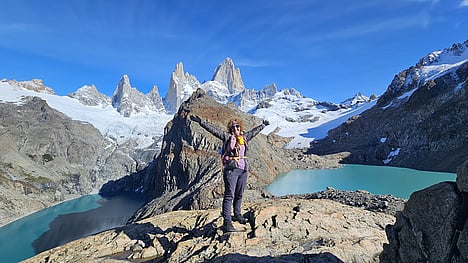
In Patagonia where the 3-3-3 Plus 3 packing worked a treat.
My Real‑World 3‑3‑3 Plus 3 Packing List
Instead of packing reactively, you pack with structure and confidence. The system scales easily. The same framework works for a weekend away, business travel, or extended holidays.
Here’s what my packing looks like in reality.
3 tops – 2 x merino tees and 1 x long-sleeved merino
3 bottoms – 1 x hiking pants, 1 pair of nicer pants, 1 pair of shorts/ OR a skirt/OR merino leggings
3 shoes – 1 pair of white leather sneakers, 1 pair of hiking boots or trail shoes, 1 pair of sandals/jandals (flip flops)
3 outer layers – 1 raincoat and rain pants (if hiking), 1 x puffer jacket, 1 x merino sweater.
Who the 3‑3‑3 Plus 3 Packing Rule Is Best For?
This method is I great for carry‑on travellers, solo travellers, frequent flyers, minimalists, anyone who hates packing stress, or families creating repeatable packing lists.
But it can work for anyone. And if you want to expand it to 4-4-4 Plus 4 or 5-5-5 Plus 5 that gives you a huge number of options and you’ll be surprised how lighter your suitcase or backpack is than when you just throw in a collection of clothes and shoes with little thought. Ultimately, any packing system only works if it works for you. Your comfort, your travel style, and the conditions you’ll actually face.
Because it’s simple and repeatable, it also works well for teaching kids or sharing packing responsibility with a travel partner.
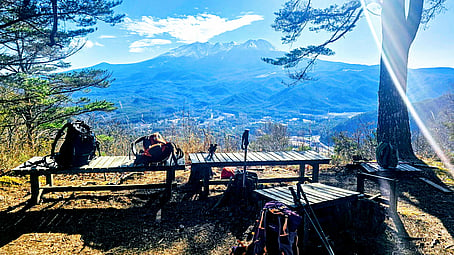
Hiking in spring with packs ready for any weather event. Mt Ontake, Japan.
Final Thoughts: Pack Less, Travel Better
The 3‑3‑3 Plus 3 rule for packing proves that you don’t need more options. Just better structure. By adding three outer layers, the rule transforms into a complete, all‑in‑one packing system that adapts to any trip and any season.
Packing becomes faster, lighter, and far less overwhelming, leaving more energy for the travel itself.
In short: the 3‑3‑3 Plus 3 rule keeps outfits simple while ensuring you’re warm, dry, and prepared for real‑world travel conditions.
Interested in learning more?
Packing light isn’t about following rigid rules. It’s about finding systems that work for you. If this approach resonates, you may enjoy these related posts:
About the author
Katherine Leamy is a traveller, hiker, and minimalist who believes packing light should never mean packing unprepared. After years of travel across changing climates and conditions, she wanted to bridge the gap between minimalist theory and real‑world travel. Her approach prioritises comfort, safety, and repeatable systems over rigid rules, helping travellers pack with confidence for trips of any length or season.
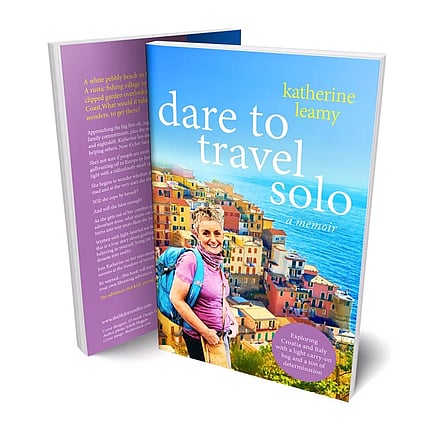
She is the author of Dare to Travel Solo , a travel memoir of her first solo and travelling light trip back in 2017 - where all this started!